
Flat Roof Maintenance for GTA Homes and Small Buildings
Practical, seasonal care and inspection steps for Brampton and Greater Toronto Area flat roofs.
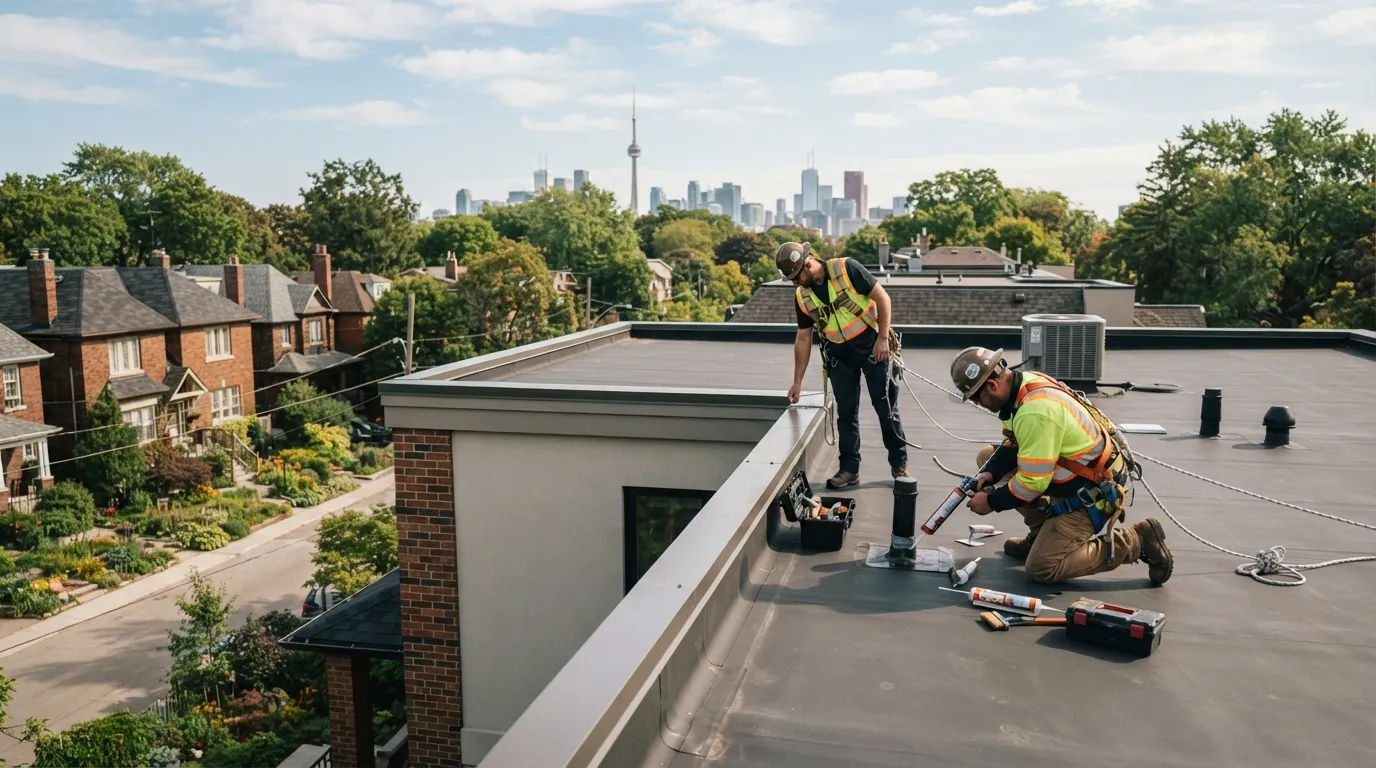
What is the most important thing to know about maintaining a flat roof?
Regular inspection and active water-management are the single most important practices: a flat roof survives best when drains flow, seams stay intact, and small problems are fixed before water ponds or migrates under the membrane.
Flat roof basics
Most residential and small commercial flat roofs in the GTA use low-slope systems: built-up roofs (BUR), single-ply membranes like EPDM or TPO, and modified bitumen. They depend on surface drainage and sealed seams rather than steep pitch; maintenance focuses on keeping the membrane, flashings, and drains functional.
Why water management matters
Flat roofs don’t shed water quickly like pitched roofs. Ponding water accelerates membrane breakdown, leads to leaks at penetrations, and can overload insulation. Ensuring scuppers, internal drains, and gutters are clear is a preventative priority.
Material-specific concerns
EPDM stretches and resists UV but needs seam and flashing checks; TPO can weld to itself but is sensitive to seam degradation; modified bitumen handles traffic well but can crack with thermal cycling. Knowing which system you have guides inspection and repair choices.
Local climate effect
Brampton and the surrounding Peel Region experience freeze–thaw cycles, heavy spring rains, and occasional summer storms; these events stress membranes and flashings. Snow accumulation and ice in winter are common causes of blocked drains and should be accounted for in seasonal maintenance plans.
Step-by-Step: Flat Roof Maintenance for GTA Homes and Small Buildings
Follow these practical steps at least twice a year—spring and fall—and after major storms. If you’re uncomfortable on the roof or the building is more than one story, hire a qualified contractor.
- 1
1. Prep and safety check
Before going on the roof confirm safe access, stable ladders, and that the roof surface is dry and not icy. Use fall protection where required and avoid stepping on soft areas or skylights; for multi-storey buildings hire a pro.
- 2
2. Clear debris and inspect drains
Remove leaves, branches, and gravel that can block scuppers and internal drains. Flush drains with water to confirm flow; trapped debris and sediment are leading causes of ponding on flat roofs.
- 3
3. Walk the membrane and flashings
Check the membrane for blisters, punctures, seam separation, and shrinkage cracks. Inspect flashings at parapets, curbs, chimneys, and HVAC penetrations; small seam issues are easier and less costly to fix than ones that allow water under insulation.
- 4
4. Look for signs in the building
Inspect attic and ceiling spaces below the roof for damp spots, mold, or discolored insulation — these indicate slow leaks. Interior evidence often reveals leak paths rather than the obvious roof surface damage.
- 5
5. Make minor repairs and document
Patch small punctures or split seams with material-specific products (EPDM tape for EPDM, compatible liquid flashings for TPO with manufacturer guidance). Photograph problems, note locations, and keep dated records — useful for warranty and insurance conversations.
- 6
6. Schedule professional maintenance
For larger defects, ponding that won’t clear, or roofing older than 10–15 years on low-slope assemblies, hire a licensed roofer for a full evaluation and written recommendations. Professionals can identify hidden issues like wet insulation needing removal.
Mistakes to Avoid
A few common missteps cause most avoidable damage and expense. Avoid rushing repairs, mixing incompatible materials, and skipping seasonal attention—each can lead to premature failure or voided warranties.
Ignoring ponding water
Letting water sit on the roof for weeks damages membranes and hastens seam failure. If drains are slow or scuppers stay submerged after rain, address drainage (clear lines, adjust slopes, or add additional scuppers) before membrane replacement becomes necessary.
Using incompatible repair materials
Applying adhesives, tapes, or coatings not intended for your membrane type can prevent proper adhesion and worsen leaks. Always match repairs to the existing material or use manufacturer-approved products; when in doubt, get a professional assessment.
Delaying repairs until leaks show inside
Waiting for interior damage is costly because water can travel along insulation or decking before staining a ceiling. Fixing external issues at the membrane or flashing level early saves insulation and framing from rot and mold.
Hiring solely on the cheapest bid
Lowest price can mean lower-quality materials, missing permits, or contractors without local insurance. Vet contractors by asking for references, proof of insurance, manufacturer certifications, and a written scope of work and warranty.
What Affects Your Outcome
Factors that change repair timelines, costs, and success:
Roof system type
EPDM, TPO, modified bitumen, and BUR each require different repair methods, materials, and life expectancies; knowing your system narrows options and compatible products.
Age and condition
An older membrane with widespread weathering or multiple repairs often justifies replacement rather than repeated spot-fixes.
Local climate and season
Freeze–thaw cycles and heavy spring/summer storms in Brampton and nearby Mississauga or Caledon affect scheduling; some adhesives and coatings have temperature windows for successful application.
Quality of documentation
Photographs, dated inspection notes, and maintenance records improve warranty claims and help contractors diagnose recurring issues faster.
Contractor qualifications
A certified installer with manufacturer ties and local references in Peel Region will deliver better long-term outcomes than an unvetted handyperson.
Local rules and permits
Repairs involving structural changes, rooftop HVAC replacement, or large tear-offs may need permits in Brampton or Peel County — check with your local building department; insurance approvals can also hinge on following local procedures.
Frequently Asked Questions
How often should I inspect my flat roof?
Inspect at least twice a year — spring and fall — plus after major storms or heavy snowfall. Frequent checks reduce the chance of ponding and let you catch small seam or flashing problems early.
Can I clear roof drains and make repairs myself?
Homeowners can clear leaves and surface debris and perform small, manufacturer-approved repairs if comfortable and safe on the roof. For multi-storey buildings, work near skylights, or any task requiring fall protection or re-roofing, hire a licensed contractor.
When is it better to replace rather than repair?
Consider replacement when ponding is chronic, insulation is saturated, there are multiple prior repairs, or the membrane is approaching its expected service life. A professional moisture survey and written estimate will help make a cost-effective decision.
Do I need a permit for roof work in Brampton or Peel Region?
Minor repairs usually do not require permits, but full re-roofs, structural changes, or large mechanical work often do. Local rules vary; verify with the City of Brampton or Peel Region building department before major work and confirm any permit or inspection steps with your roofing contractor.
How do insurance claims typically work for roof leaks in Ontario?
Home insurance claims depend on cause: sudden, accidental damage is more likely covered than maintenance-related deterioration. Document damage, notify your insurer quickly, preserve evidence, and get contractor estimates; always check your policy details and confirm local claim practices with your insurer.
What seasonal tasks should GTA homeowners prioritize?
In spring remove winter debris, check for freeze–thaw damage, and confirm drains are clear. In fall clear leaves, winterize roof penetrations, and ensure gutters and downspouts route water away from foundations to prevent ice damming and basement seepage.
Free flat roof inspection for Brampton & GTA homes
Schedule a no-cost assessment to find leaks, blocked drains, or repairs before they become major problems.
Get a Free Quote